
The quiet before a card turns
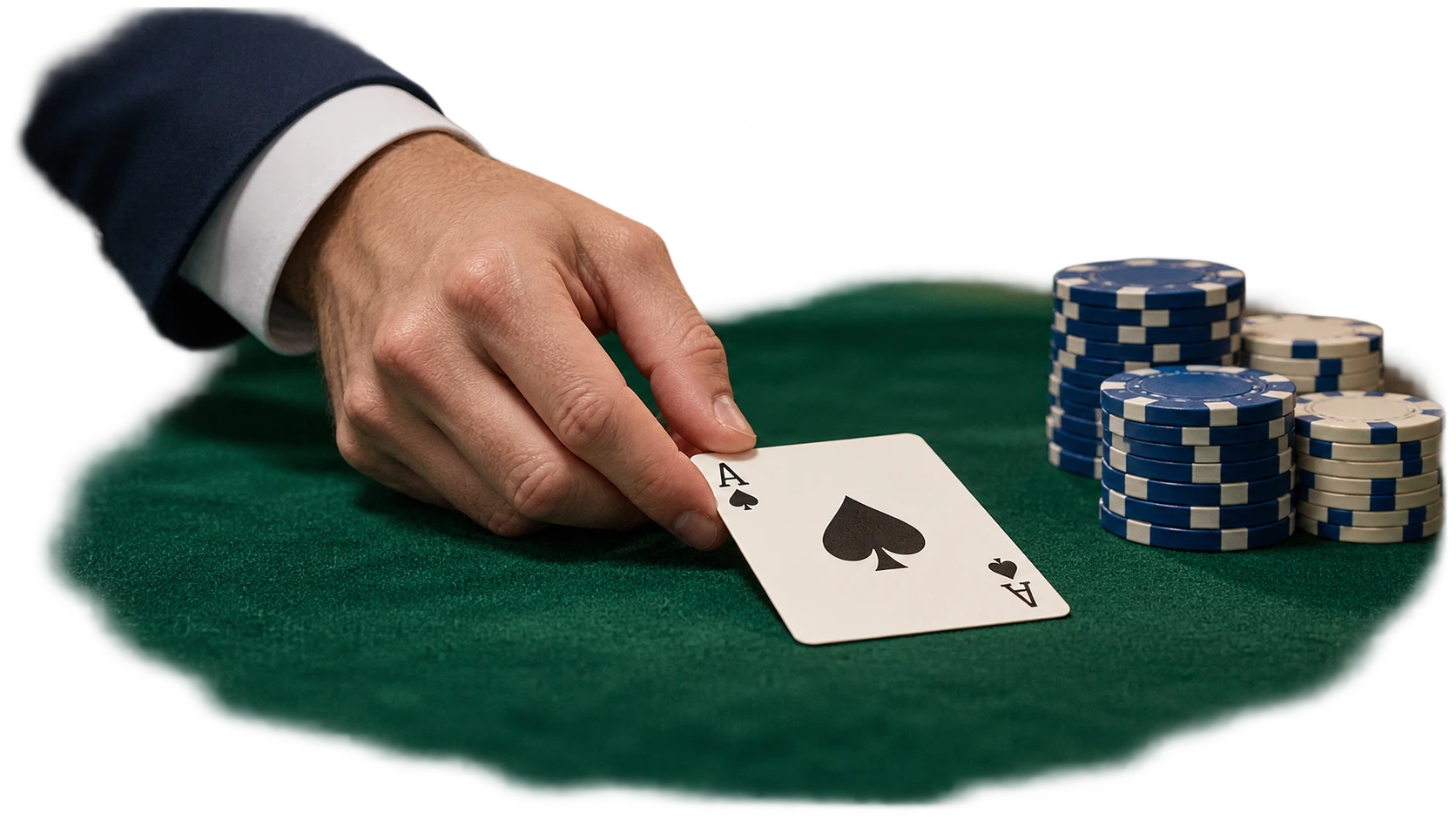
A hand rests above green felt. A white card catches the light, while a stack of blue chips stands beside it. The scene is simple enough to recognise at a glance, yet its interest lies in a small delay: the card has not quite reached the table. Casino imagery often begins with that unfinished movement. Gamdom’s supplied brand description brings casino games, live tables and slots into the same setting. Those forms share an interest in suspense, but they give it different shapes. Cards concentrate attention on a few objects; a live table adds human presence; reels fill a small stage with colour and motion.
At a card table, empty space matters. A broad area of felt makes the cards look deliberate, and the quiet arrangement invites the eye to follow one gesture. A chip stack supplies height beside the flat surface. The corners of the cards introduce sharp lines against the softer cloth. These familiar objects can suggest an entire room without showing its walls. A table scene may feel sociable or solitary depending on how closely the view is framed. A visible hand gives it a human scale, turning a collection of objects into a moment that seems to be waiting for an answer.
Different personalities around the table
Teen Patti and Andar Bahar carry strong associations with Indian card culture. Their names evoke different table conversations even before a particular round begins. Teen Patti suggests the close attention surrounding a small hand of cards. Andar Bahar brings the visual contrast of two sides into focus. As themes, both draw strength from a plain deck rather than an elaborate imaginary world. The cards remain legible, their suits and numbers easy to recognise. Much of the atmosphere comes from the people around them: a glance across the felt, a brief silence, a conversation interrupted when another card appears.
Blackjack has a similarly spare visual vocabulary. The curved edge of a table, a dealer’s position and a few cards can establish its identity. Poker creates another mood through the relationship between a shared table and each person’s private hand. The familiar Texas Hold’em image of chips and partially revealed cards makes concealment part of the picture. These are distinct settings, rather than interchangeable decorations. Even when the same colours recur, the arrangement of cards and people changes the kind of attention a scene asks for. The pleasure of looking closely lies in noticing those small differences without turning every image into a set of instructions.
Live tables and the sense of company
Human presence gives a live-table scene a different tempo. A dealer can move a card, wait, speak or turn towards the camera. The small intervals between those movements matter as much as the larger action. A room can be brightly lit while still feeling calm because everyone’s attention rests on one surface. Roulette adds a circular form to that setting. The wheel draws the eye around a centre, unlike the straight edges of a card. Its movement and the stillness of the surrounding table create a visual exchange. A close view can make a large room feel concentrated into a single shared pause.
That feeling of company helps explain the appeal of live-table entertainment as a theme. There is someone on the other side of the felt, and the setting has a recognisable rhythm. Yet the scene also remains mediated by a screen. The camera chooses what is close and what stays outside the frame. A dealer’s hands may occupy the foreground while the rest of the room becomes a backdrop. The result sits between a stage performance and a familiar table gathering. It can convey courtesy, concentration and anticipation through gestures that need very little explanation.
Reels open a brighter stage
Slots move away from the restrained geometry of the table. Reels can carry treasure, gemstones, comic characters or elemental contrasts into the same compact space. A jewel suggests a different world from a playing card; a vault suggests another kind of story again. The repeated columns organise these objects into a recognisable pattern, while the surrounding artwork gives each title its personality. Sound, movement and colour can make an individual reveal feel theatrical. That theatre belongs to the presentation. A bright symbol or a dramatic scene does not turn uncertainty into a predictable outcome.
The contrast between table and reel imagery is especially clear in the use of detail. A card scene may depend on one clean white rectangle against dark green cloth. A reel scene can fill the frame with layered colours, polished surfaces and decorative lettering. Both make room for anticipation, but one often narrows attention while the other surrounds it. A casino collection becomes more interesting when these differences remain visible. The games can share a brand setting without losing the separate moods that make a quiet table, a live dealer and a colourful reel sequence recognisable.
A change of pace
Viewed together, these forms offer a study in pace. The table holds a moment open; the dealer gives it a human rhythm; the reels compress a reveal into a burst of activity. Gamdom’s casino theme can be understood through those contrasts without treating every form as one continuous experience. There is room to appreciate the design of a deck, the poise of a dealer or the imagination of a reel world on its own terms. Entertainment remains a matter of attention and personal limits, with uncertainty present throughout. Knowing when the scene has had enough of one’s time is part of keeping that perspective.
Brand context: supplied Gamdom description. 18+; T&C apply. This independent publication does not operate gaming accounts.